Chinese Opera was invented in Song Dynasty (1179-1276.) Back then, events in the chronicle and history as well as traditional and religious belief were adapted into plays for Chinese Opera. Originally, there were about 300 types of opera in China, most of which were local operas. As for national operas, there were such as Peking Opera, Shaoxing Opera, Henan Opera, and Cantonese Opera.
In the era of Empress Dowager Cixi, Chinese Opera reached its peak of popularity (among noble classes.) Until the end of her reign, the opera that once were supported by the royal court and nobles had to turn to self-reliance and reached the general audience more for the support.
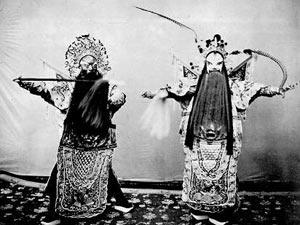
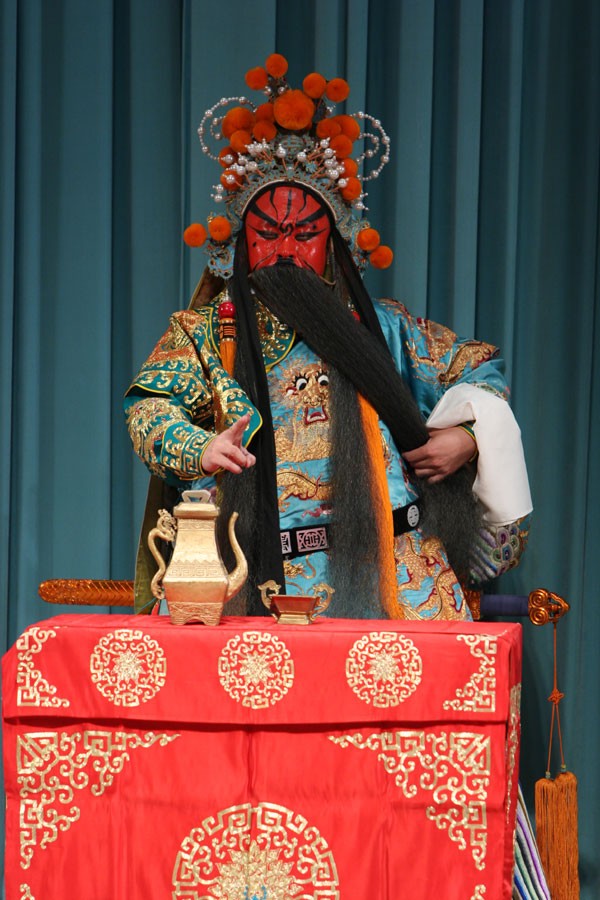
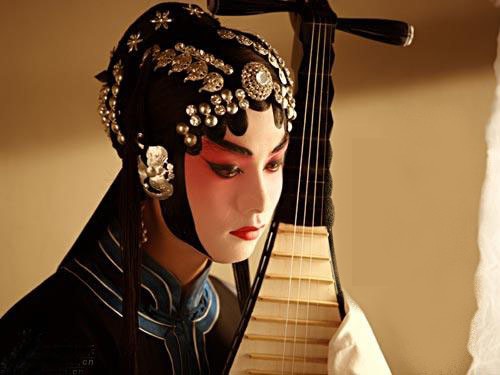
Besides dance movements, the characteristics of opera are made up of makeup and costumes as well. For example, each of various colors of the makeup indicates the personality of the characters. The red makeup, for instance, refers to a positive meaning, a symbol of honesty and courage. The black makeup conveys a neutral meaning. It is a symbol of bravery, unselfishness and clever. The blue makeup has a neutral meaning as well and is also considered as a symbol of folk heroes. The white and yellow makeup often has a negative meaning. They symbolize ruthlessness and dishonesty.
"Kunqu Opera", "Cantonese Opera" and "Beijing Opera" have been recognized by UNESCO and were registered as an intangible cultural heritage in 2001, 2009 and 2010 respectively.

China's Beijing or Peking Opera, known as the "Oriental Opera", is a national cultural heritage of China originated in Beijing where it took its name from. This opera form, referred to as "Jingju" in Chinese, which can be translated into Thai as “งิ้วปักกิ่ง” (Peking Opera), has a rich history dating back more than 200 years.
The origin of Beijing Opera stems from ancient local operas, especially the "Huiban Opera", a local opera that was well-known in southern China in the 18th century. The first Huiban opera troupe visited Beijing to participate in the performances on the occasion of the Emperor's birthday. After that, many Huiban opera troupes gradually come to Beijing to perform. As Hui Ban opera troupes moved around frequently, they always adapted the drama and performance art of other types of opera to their own form. In addition, Beijing is a center for many local operas which help Huiban to rapidly elevate the performing arts. In the late 19th century and early 20th century, after decades of development, Peking opera finally took shape and became the largest form of stage opera in China.

The performance of Chinese Opera in Thailand according to the earliest documents were mentioned in record of events by Simon de la Loubère, a French diplomat who came to develop good relations with King Narai in 1687. Also, there is another record of events mentioning Chinese Opera in the reign of King Taksin the Great of Thonburi. The record explained that, on the event that the Emerald Buddha was brought to the city, in addition to the parade, there were pantomime, drama, the classical music ensemble piphat as well as two troupes of Chinese opera performing on ships.
Chinese Opera in Thailand reached its peak of popularity during the reign of King Chulalongkorn. At that time, there were both Thai and Chinese troupes. On Yaowarat Road, a center of the Chinese community and business district, there were also many Chinese opera schools and Chinese opera houses that gave performances regularly, which reflects the long cultural relationship between the Chinese and the Thai people from the past to the present.
In the past, there were five Chinese Opera theatres at Yaowarat. Three of the opera troupes regularly give performances and made the audience so familiar with them that they were referred by audience as I Lai, Buai Jia and Tong Jek
The opera troupe consists of over 50 members including, for example, actors, musicians and staffs of various functions.
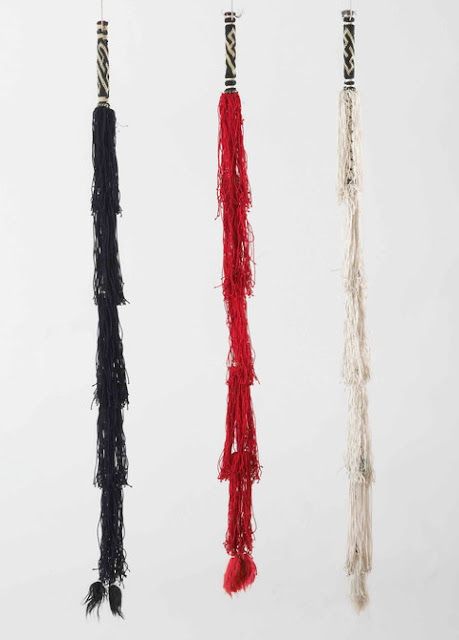
Horsewhip
A horsewhip is used in the scene with horses.
If there is a horseback riding scene, each character will show specific gestures. For example, they will act like they are riding on a horseback or show facial expressions to let the audience understand the situation in the story.
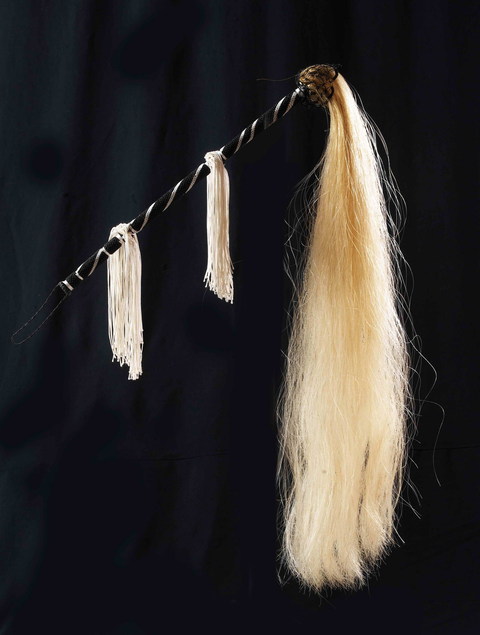
Whip
It is often used in the roles of gods, demons, monks and ascetics, which represent the role of practitioners. Also, in the role of eunuchs and maids, the whip is carried by these characters.
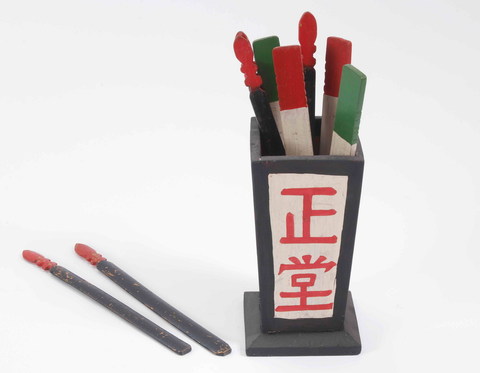
Instruction label cylinder
Often used in court scenes or at military meetings. The cylindrical cylinder contained a small piece of wood, presumably an instruction sheet. To punish someone, it would be picked up and thrown into the center of the stage.
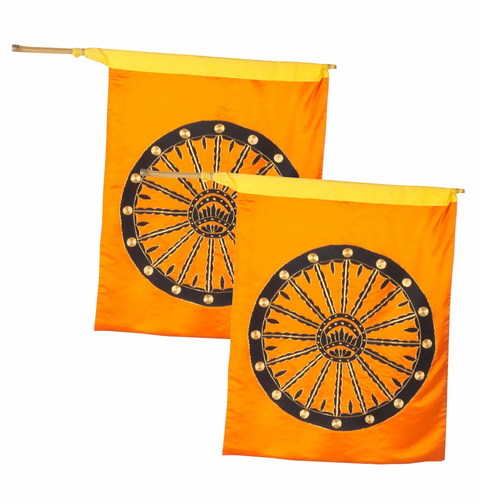
Chariot flag
It is mostly used for female roles. (If it's a male role, it's mostly the emperor. By assuming it is a royal chariot) The use of this equipment requires a role of charioteers and passengers in the scene. Passengers or charioteers will hold the flag.
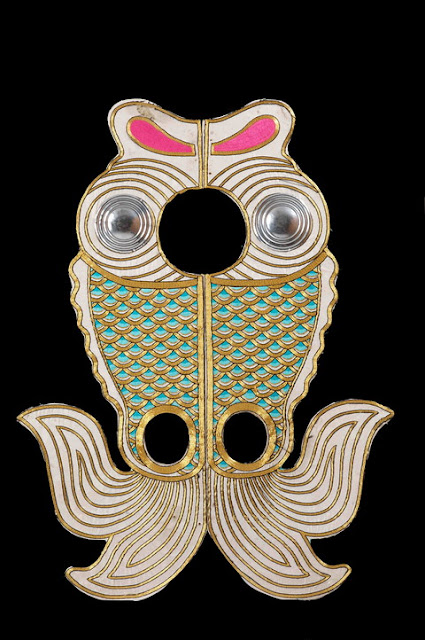
Cangue
Actors who play the role of prisoner often wear chains around their necks to show what role they are playing. In a scene where the prisoners walk to a court, they have to wear cangue.
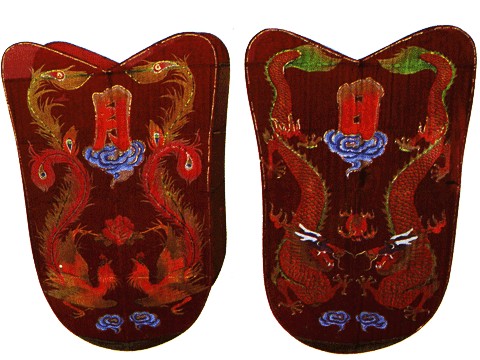
Hand fan
Only the role of royal family will use this prop. The patterns on most of the fans are dragons and swans. On the other side of the fan, there are the Chinese characters for Suriyan and Chandra. The hand fan is used in the scene of entering the throne room or the scene of the royal visit to other places.
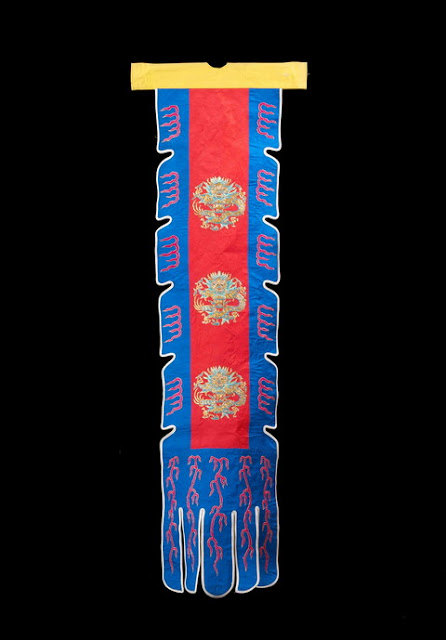
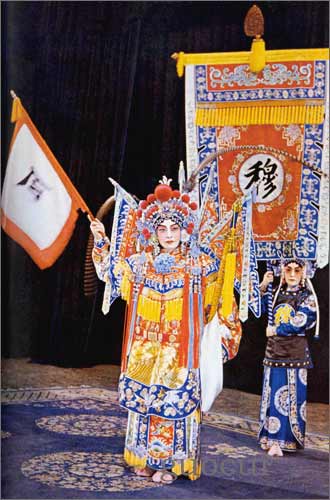
Army flag
This flag represents a unit of troops to help the audience distinguish between the armies correctly. It is mostly used in battle scenes, army meeting scenes or scenes where military is the main focus.

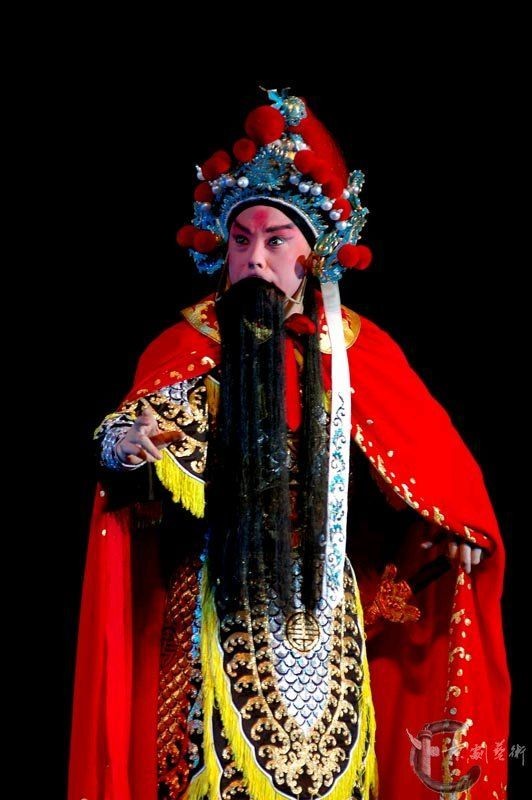
Chalang Gek Lao Chun opera troupe has existed for almost a hundred years. In the early days, the founder Sam Sia, a wealthy man in Chinatown took care of the opera troupe. At that time, the audience was enormous which led to a lot of income. When Sam Sia stopped working, he sold it to Jing Pua Chek to take over the business. Back then, Chinese operas were very popular.
In addition to performing at Yaowarat, the Chalang Gek Lao Chun opera troupe also went to perform in other provinces with a tight schedule throughout the year such as in provinces of northeastern/Isan region, Suphan Buri as well as Ang Thong.
With hope for a bright future, poor people in the old days therefore sold their children to the opera troupe. During the opera practice, they would receive 500 Thai Baht per year. And after their children could perform in the play, they would receive a salary.
The Chalang Gek Lao Chun opera troupe was so famous that it was invited to play in Malaysia several times. After 30 years of Jing Pua Chek’s operation, at very old age, he tried to pass on his business to his heirs but failed because they ran their own business. Therefore, he had to sell the opera troupe to someone else.
Until Tek (the current opera troupe owner) heard about the sale announcement of Chalang Gek Lao Chun opera troupe and decided to buy the business because he used to study musical instruments in China and his parents also ran another Chinese opera troupe.
After the takeover, the opera troupe faced a problem in performing an opera in Malaysia. The situation of the opera troupe was critical as they went on without getting hired for over 169 days which resulted in quite a large loss. It took more than two years for the group to recover. After returning to give performances, they translated the plays into Thai and added Thai subtitle so that Thai audience could understand the plays better. Another improvement included adding new features to the shows such as a face-changing opera and a thousand-hand opera to add excitement to the operas for the audience.
Later, the Ministry of Culture invited the Chalang Gek Lao Chun opera troupe to join the Chinese Opera Association. As a result, the opera troupe got to join national events such as the celebration of 40 years of Thai-Chinese relations held at the Cultural Center and also performed at a celebration of the Rattanakosin period and Chinese New Year Festival.
Nowadays, the Chalang Gek Lao Chun opera troupe is still being hired to perform at the shrine, a birthday celebration of gods, a ceremony for setting up a shrine, the Ghost Festival, and government events. In addition, Chinese people coming to Thailand to set up a shrine to pay homage to the local gods will hire an opera to perform on Chinese Thanksgiving Day.
Male roles include Senior Male Role, Military Male Role, Junior Male Role, Male Role with red-painted face and Young Male Role.

Senior Male Role is a male character with beard who mainly sings. The lighter of color of beard, black, gray and white, refers to an older age of the character.

Military Male Role is a warrior character whose main part in the play is to fight in battle scenes. The Military Male Role can be categorized into two types: Military Male Role in a warrior costume (with a flag) and normal Military Male Role.

Junior Male Role is a young man role who wears no beard.

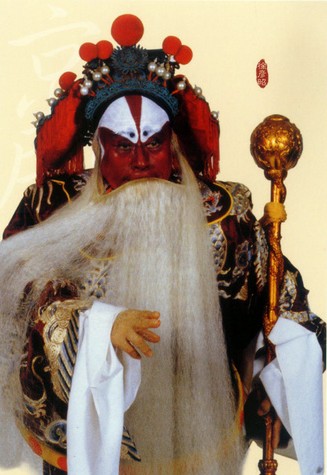
Male Role with red-painted face is a male role who is painted red on his face.

Child Male Role is a kid role.
Female roles include Main Female Role, Young Female Role, Military Female Role, Senior Female Role and Young Girl Maid.

Main Female Role is a main female character who fully features traditional characteristics. The character plays both as a grieving role and a noble whose parts mainly include singing.

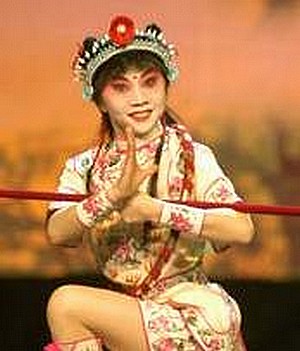
Young Female role is a character that partly shows a feature of the Military Female Role, but the role does not focus on battling as much as the role of Military Female Role. The Chinese name for this role is Daomadan. Dao means a knife, Ma means a horse, and Dan means a female role.

Military Female Role is a warrior character and focuses on battling. The role can be categorized into two types: Military Female Role in a warrior costume (with a flag) and normal Military Female Role.

Senior Female Role includes both Military Role and Civil Role.

Young Girl Maid is a role of a female clown.

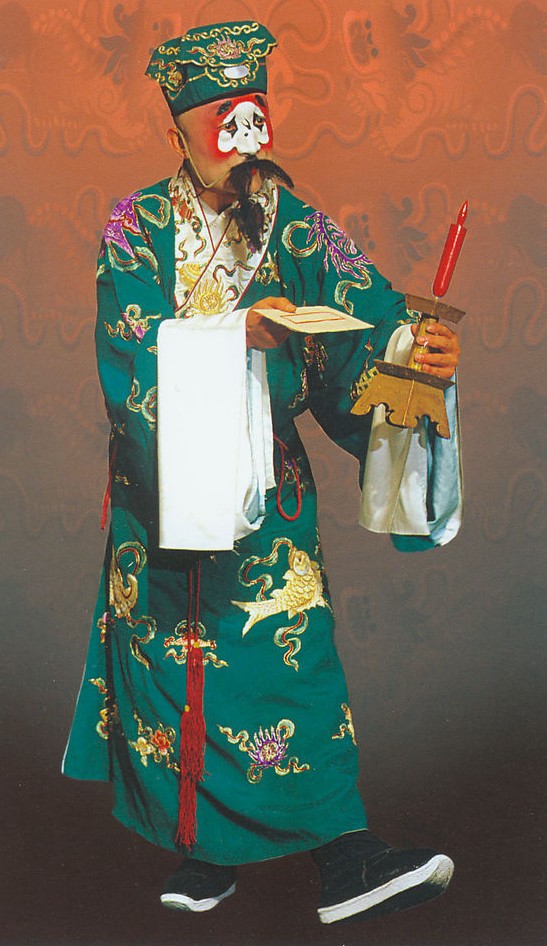
Paint Face includes moral and immoral characters with various patterns of face paints. There are both Military Role and Civil Role.

Clown Role, as the name suggests, includes both Military Role and Civil Role.
Chinese Opera Masks
Chinese opera masks are the most characteristic art in Peking opera. Either honesty or evil, beauty or ugliness, goodness or badness, high or low status of the roles can all be expressed through masks in various colors.
Red color, for example, indicates honesty.
Purple shows courage and intelligence.
Black shows that the role is of good character and honesty.
White indicates that this role has an evil character.
Blue represents strength, skill in martial arts and bravery.
Yellow indicates ruthlessness.
Gold and silver are mostly used to represent deities, buddha statues or ghosts and demons.
Gold face and gold body is a symbolizes emptiness and miracles.
from 4-12 February 4, 2023
10:00 – 21:00
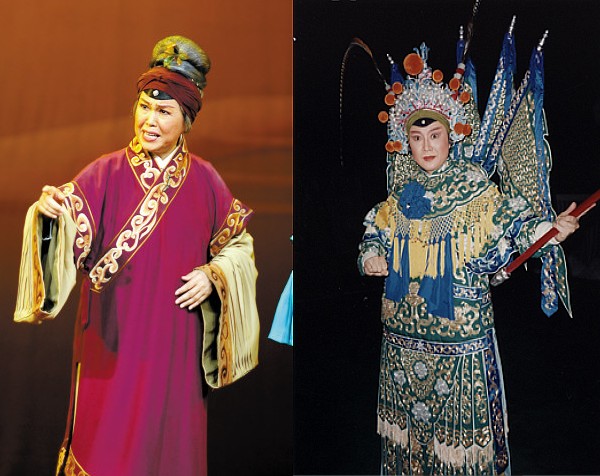
Noble Costume
This category of costume is dressed by the roles of the royalty and the noble.

The costume is a round neck, buttoned on the side, with white cloth extending from the sleeve hem. The costume’s length covers the ankles. Female costumes are shorter than male costumes.
The origin of the costume is an attire in the Ming and Qing dynasties. In the Ming period, the costume was given to a nobleman who made a contribution to the dynasty as a royally granted gift. Later, in the Qing era, the costume was considered as a lucky costume.
Inspired by attires from different eras, the costume is a combination of beautiful details. The wide and extended sleeves of the costume allow easy hand movements to express the character's emotions, giving another unique feature of these Chinese opera costumes.
Most of the patterns on the costumes are the sun, dragon, mountain, cloud, and various auspicious objects and symbols. The dragon symbolizes nobility that must be respected. The dragon pattern is divided into several types, such as the ring dragon (whirl), the moving dragon, and the great dragon, each suggesting a different meaning. The pattern on the dress conveys the personality and characteristics of the character.
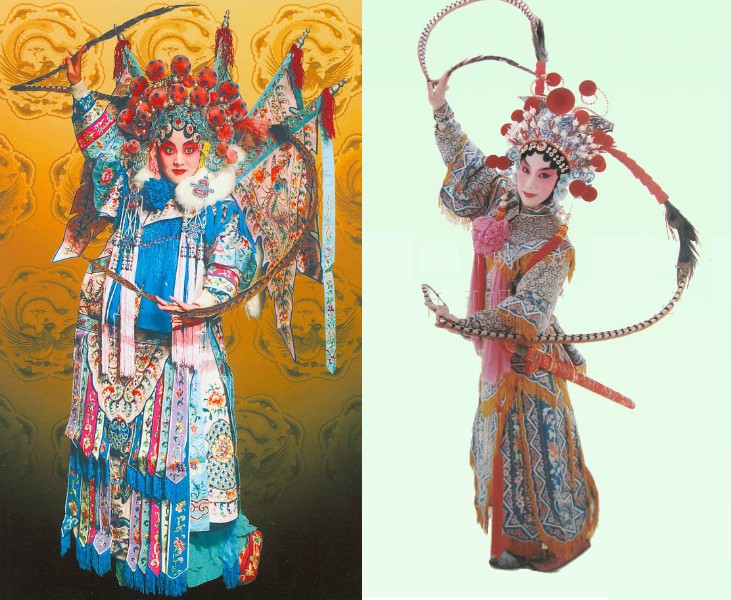
Armor costume
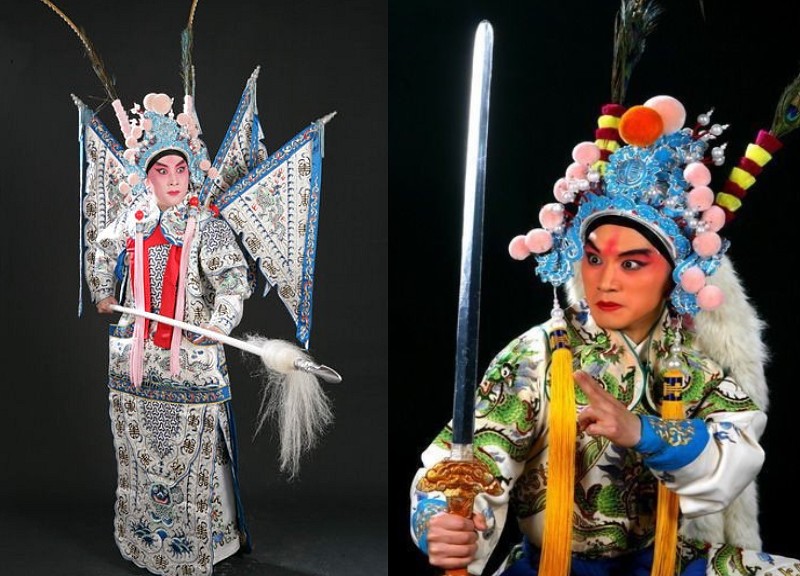
This type of costume is used for the roles of both male and female warriors, generals and commanders. The costume is a round neck, covered with a shoulder collar. The cuffs are wrapped around the wrists. There are defensive coverings on stomach, legs and on both sides behind the hips. Female armor, with a skirt, has a smaller stomach covering than male armor.

Developed from armor during the Qing Dynasty, the armor consists of a shirt and a skirt covered with a decorative sheet of metal to which, in fact, is unsuitable for battle as this costume is meant to be dressed for ceremonies. Unlike ancient armor made of metal for an actual combat, the amor for the use on stage performance has been styled and developed to be what we see today.
Most of the patterns are fish scales which can be seen on the chest and shoulder parts of armor, also decorated with auspicious characters on the costume that mean longevity to wish them a safe return from the battle. The male character's stomach protection is usually painted with a pattern of a dragon. The stomach protection for female role is decorated with pattern of a swan and a peony. The stomach protection plate for a patterned face is usually paint a tiger's head to show forcefulness.
The costume color for the roles is chosen based on the same principles as the noble costume. For example, a black-painted face role dresses in black armor, a red-painted face role dresses in green armor, and Junior Male Role wears white armor.
The armor costume is embroidered with gold threads so that it will look like the metal when the light hits it. As for the stomach armor plates, some are decorated with silk, and some are embroidered with gold threads and partly silk. In the mourning scene, the white armor embroidered with silver threads will be used.
Robe
The robe is an informal costume dressed by the roles of royal family and noble in normal scenes. The robe consists of a long, large lapel, buttoned on the side, side slit on both sides, with white cloth extending from the sleeve hem. The robe for male roles is at ankles length. The female robes are slightly longer than the knees length. The patterns on the robes are embroidered with threads or silks of various colors.

This costume is developed from a formal dress of female noble in Ming Dynasty.
Originally, the dress consists of the sleeves that fit the arm size, and the long collar. Until the end of the Ming Dynasty, the sleeves have been widened and the collar is shortened in length.
The buttons on chest part of the robe have been substituted with two small hemlines that allow smooth movement of the swaying dress. The costume is suitable as a casual wear of the wealthy when relaxing. Also, it allows the performers to move and dance easily.
The pattern for emperor's robe is a dragon pattern. The robe for empress and the concubine has a swan pattern. The robe for a queen mother role is decorated with a dragon and swan pattern. The yellow robe is for the royal family. The red robe is dressed in auspicious event scenes. The elderly wear an olive green robe. For other roles, the robe will be chosen based on suitability. The yellow robe is embroidered with silk, and robes in other colors can be embroidered with pure silk or embroidered with silk and contrasted with gold threads.
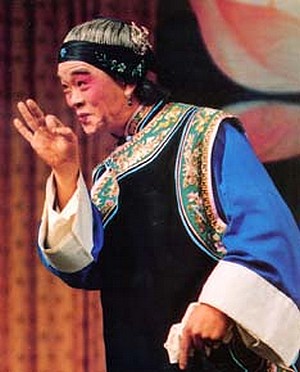
Casual Costume
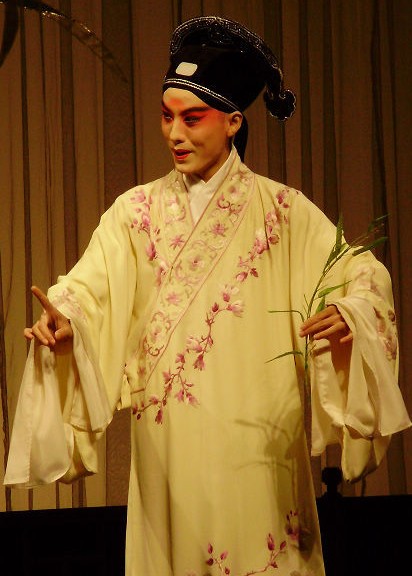
This costume is worn by performers who play the role of the scholar, warrior folk, or ordinary villager. The dress consists of an oblique collar and buttons on the right-hand side. The costume length for male roles is at foot length. The shirt is slit on both sides, has wide sleeves, and has a long edge of a strip of cloth. The costume for female roles features front buttons, a stand-up collar, and a dress length slightly below the knees.

The costume for male roles evolved from casual wear that features an oblique collar and wide sleeves during the Ming Dynasty. This kind of attire has been passed down for a long time since the Tang and Song dynasties. The costume for female roles developed from a costume that features a stand-up collar, buttons on the front, quite short length, a shirt tail tucked in a skirt. The style of a stand-up collar covering neck for the neat look gained more and more popularity and reached during the Ming Dynasty.
In terms of function, the costume can be dressed for many occasions. It can be worn as an inner layer before the robe. The male roles can wear the casual costume without buttoning up to express openness and bravery.
The patterns for the casual costume are traditionally designed based on the type of character. The patterns can be located in just the corner of the costume or all over the costume or the costume can have no any patterns on it. The yellow costume is worn by royalty roles. The red costume is worn in auspicious events. Elderly people wear olive green costume. For other roles, the color of the costume will be chosen according to appropriateness. Embroidery for the casual costume can be done with just silks or silks contrasted with gold threads.
The patterns for the casual costume are traditionally designed based on the type of character. The patterns can be located in just the corner of the costume or all over the costume. Also, the costume can have no any patterns on it. The yellow costume is worn by performer playing royalty roles. The red costume is worn in auspicious events. Elderly people wear olive green costume. For other roles, the costume color will be chosen according to appropriateness. Embroidery for the casual costume can be done with just silks or silks contrasted with gold threads.